






Skip to content

The Technology

Did you know that biofilm is present in 90% of chronic wounds?

Why is Biofilm an issue for wound care?

Bacteria present in wounds can adhere to the wound bed and multiply, leading to biofilm formation.

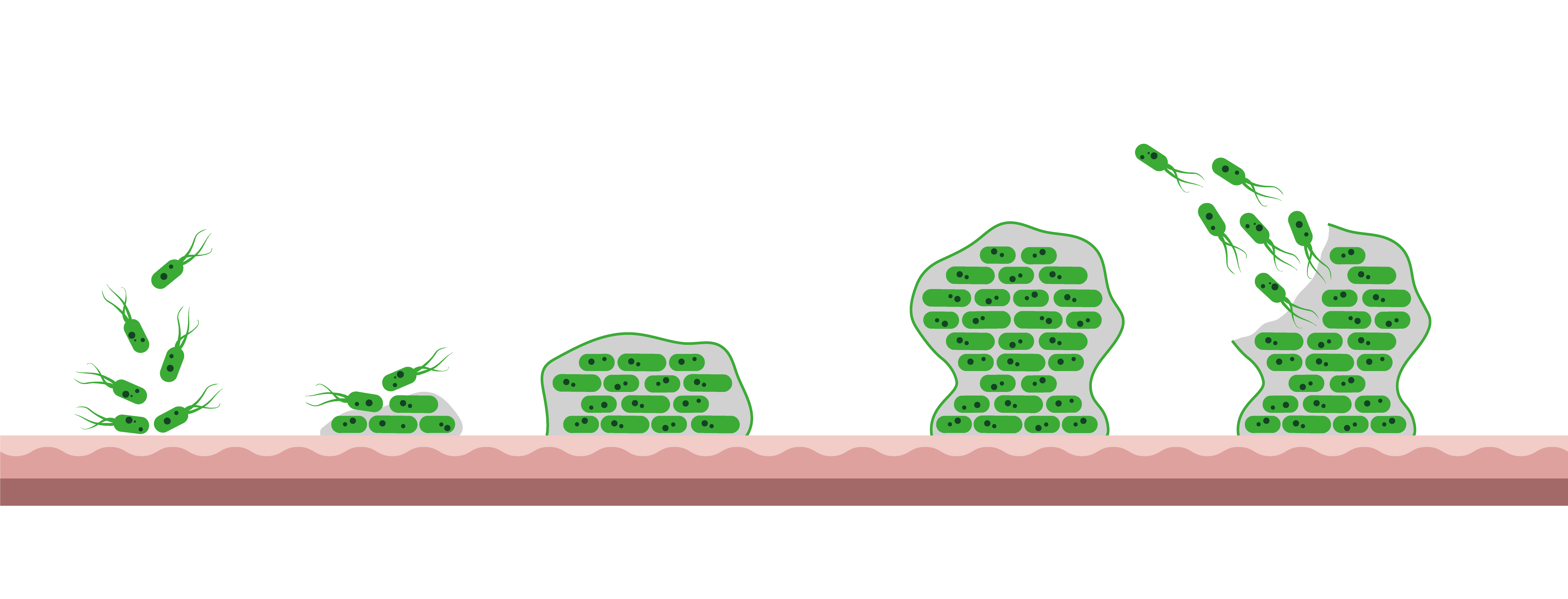
What is a biofilm?

A biofilm is a community of microorganisms (including bacteria and yeast) that have ‘put down roots’ and adhered to a surface. These roots are a thick, viscous extracellular polymeric substance (EPS) that allows the microorganisms to stick together and offers them protection from topical agents.

The biofilm and microorganisms grow and develop, eventually leading to degradation and detachment, whereby the microorganisms recolonise and begin a new cycle.

Biofilms have been shown to delay healing due to impaired epithelialization and granulation tissue formation. They also promote low-grade inflammatory responses which interfere with wound healing. The EPS also acts as a physical barrier, leading to reduced susceptibility to topical antimicrobial agents.

The Burden of Chronic Wounds

Wound infection has a serious impact on healing by reducing the rate of healing, increasing costs of treatment, rising clinician time, reducing the quality of a patient’s life, and potentially leading to amputations and fatalities.

Chronic Wounds Healing Rate

No Evidence of infection
Definite or Suspected Infection​

The difference is the impact of infection on healing

Globally, patients and clinicians are dealing with 120 million wounds, with prevalence increasing at an alarming rate. The capacity of healthcare staff is affected, costs are increasing, the requirement for clinical intervention is on the rise and backlogs of patients are building up. Healthcare systems are struggling to cope.

NHS Patients with a wound (millions)

2012/13
2017/18

73% increase in 5 years

NHS spend on wound care (millions)

2012/13
2017/18

53% increase in 5 years

Reference: GuestJF, et al. BMJ Open 2020;10:e045253. doi:10.1136/bmjopen-2020-045253

Stagnant Treatments

Silver-containing products are currently one of the leading treatment choices for infected wounds. Silver provides antimicrobial and antibacterial action released steadily as a form of topical wound care.

Despite first being launched in the wound care market over 25 years ago, silver treatments rely on minimal clinical evidence and have experienced only marginal innovations in that time. 

As well as being slow-acting, potentially cytotoxic, having a high drain on clinician time, and being ineffective against bacteria within biofilms, silver-containing products are also facing industry challenges. 

The healthcare system is primed for an innovative and effective solution.

WoundSan®’s unique technology has been specifically developed to address many of the issues caused by biofilm, wound infection, and stagnant treatment technologies.

Multi-platform technology

WoundSan® is flexible enough to be integrated across several wound care platforms, from irrigation to dressings, foams, and other contact layers.

Low
cytotoxicity

The unique formulation is proven to show low cytotoxicity to ensure the complete healing of wounds.

High efficacy and biofilm disruption

WoundSan® is effective against several microorganisms, including bacteria and fungi, and can safely disrupt the biofilm and prevent formation.

How WoundSan® compares to other wound care solutions

WoundSan® has the potential to improve and rejuvenate the approach to wound care globally by affecting several key aspects of the treatment process.

  • Provide clinicians with solutions to improve wound care resulting in a positive patient outcome
  • Reduce treatment times and the requirement for clinical intervention
  • Improve efficiencies resulting in a lower cost associated with chronic wound treatment
  • Reduce the prevalence of chronic wounds
  • Reduce the backlog of patients suffering from chronic wounds
  • Improve the quality of life of patients

Phone: 01639 898150

Address: Cramic Way, Port Talbot, SA13 1RU